

PTSD Therapy in Austin & Round Rock, Texas
Maybe It Wasn't "That Bad," But It's Affecting You, And That's Enough.
You keep going, but underneath, you feel exhausted and stressed and you're tired of pretending it isn't happening.
Trauma Doesn't Stay in the Past. It Lives in Your Body, Your Relationships, and Your Reactions
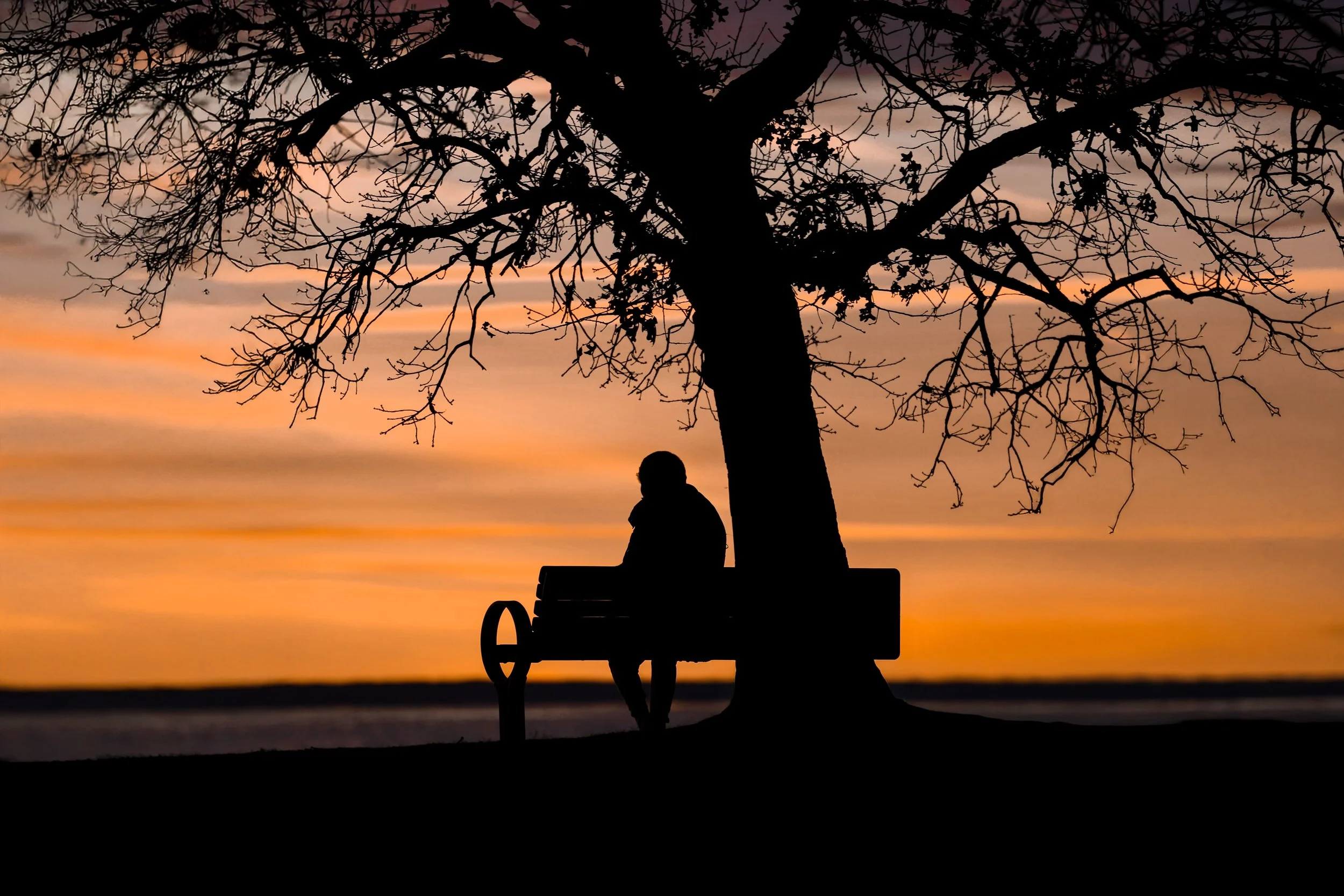
Many people think of Post Traumatic Stress Disorder (PTSD) as something that only happens to people who have experienced one big traumatic event, like an earthquake, or a car accident, or as something that happens only to soliders who are exposed to violence in war. People may think the trauma has to be something very obvious, dramatic, and visibile. PTSD can grow out of those types of experiences, but it can also grow from a childhood where you never quite felt safe, a family system that required you to be small, perfect, or invisible, or a relationships that hurt you in ways you are still making sense of.
People with PTSD are often high functioning perfectionists who take care of things and fulfill important roles, but in the quiet moments they are lonely, and they wonder why they don't feel safe connecting to others. They sometimes wonder if what they went through is not enough to be considered a trauma, if they're exaggerating, or if there is something wrong with them, but their experience makes sense in the context of what they've lived through. PTSD can look like hypervigilance disguised as competence and like numbness disguised as calm. It can look like a person who has built an impressive life and can’t figure out why they feel so far away from it.
Traumatic relationships and experiences don't stay in the past because that's not how the brain stores them. When something overwhelming happens, your ability to remember the story of what has happened clearly goes offline, because your energy becomes directed towards protecting yourself. Your body dumps adrenaline and cortisol into your system to help you fight, run away, or shut down to keep yourself safe, and the memory gets stored as emotions attached to pieces of the story instead of the whole narrative memory. The part of your brain that timestamps memories also doesn't process overwhelming experiences the same way. So even years later, if something happens that triggers those emotional memories, your mind goes into protective mode and thinks the trauma is recurring. Suddenly you're fighting with your partner as though you were fighting for your right to exist, or shutting down completely because whatever triggered the memory of the past in your brain warns you that you aren't safe if you don't freeze. People want to avoid feeling those ways, so they often limit their contact with things that might trigger them, including talking about and thinking about what caused the trauma in the first place, and that's exactly what helps PTSD stay alive in your mind.
PTSD reliably shows up in relationships. Your closest relationships are where your guard comes down, where you are most yourself, most vulnerable, most exposed. They're also where your history surfaces most. People who shut down during conflict aren't always indifferent, and people who escalate and pursue their partners aren't necessarily irrational. People who are constantly watching for something to go wrong and are cautious aren't broken. All of these patterns are because they're responding to something real that happened to them, in a body that learned to protect them, in a relationship that is now bearing the weight of that history, and usually they aren't even aware of why that's happening and what that costs them in terms of intimacy and closeness until they come to therapy to work on it.
Partners of people with PTSD often develop symptoms of PTSD themselves. Hearing stories about the trauma the other person went through is important to the intimacy shared between two people, and also it’s painful and scary. A partner who is frequently triggered may influence the other person to feel like they have to also be on guard all time. Families may feel lonely and isolated themselves because the person with PTSD tends to isolate or use things to emotionally numb themselves like over-working, playing too many video games, or drinking excessively which leaves them emotionally unavailable.
You may not have thought of yourself as someone who experienced trauma or who has PTSD, but if something from your past is living in your present, in your body, your reactions, your relationships, it’s worth getting help for.
What Is PTSD?
Trauma occurs when someone experiences an event, series of events, or set of circumstances that is harmful or life threatening and that has a lasting negative impact on functioning and well-being. What matters isn't whether someone else considers it bad enough. If it exceeded your capacity to cope at the time it occurred, it was bad enough. That's not a flaw in you. Your capacity is shaped by things largely outside your control: your neurobiology, your genetics, and what support you had access to afterward.
PTSD develops when the nervous system doesn't fully recover from trauma. It isn't a sign of weakness, and it isn't reserved for people who have survived the most dramatic or visible forms of suffering. It develops when a traumatic experience exceeded your capacity to cope and your nervous system adapted to protect you, and then kept protecting you long after the danger had passed.
Symptoms of PTSD fall into a few broad categories. Some people re-experience the trauma through flashbacks, intrusive memories, or nightmares. The past breaks through without warning, leaving people feeling anxious and on edge. Others live in a state of constant vigilance, scanning for threat even in safe situations, unable to relax, always waiting for something to go wrong. Many people with PTSD find themselves avoiding anything that might remind them of the trauma, including certain people, places, conversations, or feelings. Avoiding those things feels like the only reliable way to keep the past from flooding the present. People experiencing PTSD often unconsciously change how they think and feel about themselves and the world. A persistent sense of shame takes root, along with the belief that they are fundamentally damaged and that something is wrong with them that can't be fixed. They may have trouble experiencing positive emotions, and a sense of numbness settles over everything, like their lives are covered in a shroud of mist that's hard to see and feel through.
These symptoms don't always look like what people expect. Hypervigilance can look like being exceptionally organized, prepared, and on top of everything, because staying one step ahead feels safer than being caught off guard. Avoidance can look like a full calendar, a demanding career, a packed schedule that leaves no room for stillness, because having time to feel anything risks letting in negative emotions and anxiety. Emotional numbing, which often goes with PTSD, can look like calm competence, and like being the person everyone else relies on. If shutting down was the safest response available during a traumatic childhood, carrying yourself with cool distance from everyone feels safer when you’re an adult. The person with PTSD in the room is often the last person anyone would suspect. They can be the most capable person in the room, having built their functioning on top of something they have never had help carrying, and they have gotten very good at it.
PTSD can develop after a single overwhelming event like an accident, an assault, a medical crisis, or a sudden loss. It can also develop from prolonged or repeated experiences, often beginning in childhood, like growing up in a home that didn't feel safe, a family system shaped by emotional immaturity, addiction, or abuse, or a relationship that caused lasting scars. This kind of PTSD is relational at its core. It developed inside relationships, and it shows up most intensely inside relationships with partners, with family, with anyone you allow close enough to matter.

You Might Recognize Yourself Here
People who come to therapy for PTSD often don’t call what they’ve experienced trauma or have the diagnostic term, PTSD, for it. Instead they come in for loneliness or isolation, a relationship that isn’t working, anxiety or exhaustion they can’t shake, or feeling that they can’t ever really find a place that feel emotionally safe in.
You're not sure what you went through counts as trauma, but it was bad. You've never quite recovered from it, and it's affecting your life in ways you can't fully explain.
You've always been the capable one. You manage, you deliver, you take care of everyone around you, but you don’t feel safe asking for what you need or for receiving help and intimacy because it feels unsettling.
You want connection but something keeps you at a distance from it, even from the people you love most.
You go a long time holding it together and then something small happens and you crash out emotionally. Afterward you don't fully understand what happened or why it felt so big.
You've built something good, a career, a relationship, a life, and you feel strangely disconnected from all of it like you're watching it from somewhere slightly outside yourself.
You blame yourself for not feeling grateful for the life that you have built and not enjoying it enough instead of focusing on the difficult part that you wish would just go away.
You didn't grow up feeling safe, and now you don't know how to feel safe with the person you love most.
You've been told you're too sensitive, too reactive, too much by someone and you've spent years trying to manage yourself down to a size that doesn't cause problems.
Conflict feels triggering and you end up reacting to something that you don’t quite understand.
You function well on the outside but you struggle with anxiety, sleep, and feeling connected with others.
You can't turn off the feeling that something is about to go wrong, even when everything is fine.
You're the partner. You love them and you don't know how to reach them, and you're starting to wonder what this is doing to you.

How Healing Actually Happens
Starting therapy for PTSD can feel like the thing you most need and most want to avoid at the same time. You don't have to come in ready to tell your story in detail. You don't have to move faster than feels safe. The work is paced to you, and there are effective ways to treat PTSD that don't require you to discuss every detail of what happened to heal.
You also don't have to come in alone. Trauma can be worked through with a partner, and doing so often helps both people, giving the partner a way to understand what has been happening in the relationship, and addressing the symptoms of PTSD that partners frequently develop themselves from living alongside someone who is healing.
Healing often involves:
Learning to recognize your own triggers and understand what your nervous system is responding to
Processing the memories that are stored as fragments, including the emotions, sensations, and pieces of the story that never got organized into the past where they belong
Reducing the shame and self-blame that PTSD almost always carries with it, including the belief that you are too much, too reactive, and too broken to be loved deeply and fully
Grieving what you didn't get, what was taken from you, and the version of yourself that existed before
Regulating your nervous system that has been in chronic alertness or shutdown so that stillness stops feeling dangerous and you can feel peaceful
Gradually learning that safety in relationships is possible, not just as an idea, but as something you can actually feel
The goal is for your system to stop reliving it so that you can be present in your life and in your relationships in a way that hasn't been available to you.
How Therapy Helps
Therapy for PTSD addresses both the emotional experience and the underlying nervous system patterns that keep you stuck. Depending on what you bring and what the work calls for, this may include:
EMDR (Eye Movement Desensitization and Reprocessing), to help process intrusive memories and stuck trauma responses that live in the body rather than in conscious thought (training by Arielle Schwartz, PhD and Stacy Ruse, LPC)
Cognitive Processing Therapy (CPT), for working with self-blame, shame, and the distorted beliefs that trauma leaves behind without requiring you to recount your experience in detail (training by Kathleen Chard, PhD, one of the primary developers of the CPT protocol)
Cognitive Behavioral Conjoint Therapy (CBCT) for PTSD, an evidence-based approach that incorporates a significant other directly into PTSD treatment, helping couples address trauma symptoms while strengthening relationship support and connection (training by Candice Monson, PhD and Steffany Fredman, PhD, developers of CBCT for PTSD)
Shame-informed treatment, to address the deeper identity-level wounds that trauma leaves behind, the belief that something is fundamentally wrong with you, not just what happened to you (training by Patty Ashley, PhD, LPC)
Narcissistic abuse recovery, for people whose PTSD developed inside a relationship defined by coercive control, emotional abuse, or chronic invalidation (training by Ramani Durvasula, PhD)
Complex trauma and parts-based work, to reach the deeper layers of a nervous system shaped by prolonged or relational trauma, including dissociation, chronic shutdown, and the fragmented sense of self that complex trauma can create (training by Janina Fisher, PhD)
Gottman Method trauma-informed couples work, for partners who want to heal together, addressing both the individual trauma and what it has done to the relationship (training by John Gottman, PhD and Julie Gottman, PhD)
You can learn more about my training and credentials here.
About My Approach
I'm Tiffany Savener, a trauma-informed relational therapist practicing in Austin, Round Rock, and throughout Texas via telehealth. I work from the belief that trauma is fundamentally a relational experience. Trauma often happens in the context of relationships, and it heals in the context of relationships.
My approach is collaborative and paced to you. We don't rush toward the hard things, but we don't avoid them either. You don't have to have your story organized before you start. You don't have to know whether what you went through counts as trauma. We begin where you are, and we go at a pace that feels workable.
You can learn more about my clinical philosophy and approach here.
FAQ
-
Yes. I offer in-person sessions in Northwest Austin near Far West and Mopac, and in Round Rock. Secure virtual therapy is available throughout Texas.
-
PTSD doesn't always look like flashbacks or nightmares. You might notice hypervigilance, avoidance, emotional numbness, difficulty trusting people, intense reactions to conflict, sleep problems, or feeling disconnected from yourself or your relationships. If something from your past continues to shape how you feel, react, or relate to others, it's worth exploring whether trauma may be part of what's happening. You don't have to diagnose yourself before reaching out.
-
You don't have to be certain before you reach out. Many people who come to therapy for PTSD have spent years questioning whether what they went through was bad enough to deserve help. Trauma isn't defined by how dramatic the event was. It's defined by what it did to your nervous system. If something from your past is affecting your relationships, your sense of self, or your ability to feel safe, that's worth exploring. You don't have to have an answer before you start.
-
Yes. PTSD can develop after a single overwhelming event like an accident, a medical crisis, an assault, or a sudden loss. If you are navigating that kind of experience, therapy can help your nervous system process what happened and reduce the symptoms that are affecting your daily life.
-
Yes. I work with complex and relational trauma, including trauma that developed through prolonged or repeated experiences, particularly when those experiences began in childhood or occurred within important relationships. This work can involve PTSD symptoms as well as difficulties with emotional regulation, self-worth, trust, attachment, and relationships.
-
Yes. PTSD and other trauma responses can develop from childhood experiences in which you did not feel safe, protected, understood, or emotionally secure. I work with adults whose histories include emotional abuse, neglect, emotionally immature parenting, addiction, or other chronic relational experiences that continue to affect how they see themselves and relate to others.
-
It can. Relationships defined by coercive control, chronic invalidation, emotional abuse, or narcissistic abuse can have significant and lasting effects. When those experiences continue to affect your sense of safety, relationships, emotional responses, or sense of self, trauma may be part of what you are experiencing. The narcissistic abuse recovery page describes that work in more depth.
-
That is something I work with directly. When both partners carry significant trauma histories that are showing up in the relationship at the same time, the work requires someone who can hold both people's pain simultaneously without losing sight of either. The trauma-informed couples therapy page describes that work in depth.
-
Yes. You don't both need to have a trauma history for couples work to be helpful. When one partner has PTSD, it affects the relationship, and partners frequently develop their own symptoms from living alongside someone who is struggling. Coming to therapy together can help both of you understand what has been happening and find a way back to each other.
-
PTSD often shows up in close relationships, in the way you fight, shut down, keep distance, or find yourself reacting in ways that don't match what's happening in front of you. Partners may experience those patterns without understanding where they come from. If this sounds familiar, the trauma-informed couples therapy page describes how that work can help both of you.
-
Yes. PTSD can be addressed within couples therapy when trauma symptoms are significantly affecting the relationship and couples work is appropriate. The approach depends on the nature of the trauma, each person's needs, and your goals for therapy. In some situations, individual trauma treatment and couples therapy may be used together.
-
No. There are effective, evidence-based treatments for PTSD that do not require you to recount your experience in detail. EMDR processes trauma through a structured approach that doesn't center on telling the story. Cognitive Processing Therapy works with the beliefs and thoughts that maintain PTSD rather than requiring a detailed account of what happened. The work is paced to you.
-
I use evidence-based approaches including EMDR and Cognitive Processing Therapy (CPT), along with trauma-informed relational and complex-trauma approaches. Which approach we use depends on the type of trauma you're dealing with, your symptoms, your goals, and what feels workable for you.
-
EMDR, or Eye Movement Desensitization and Reprocessing, is an evidence-based treatment for PTSD that helps the brain process traumatic memories that have become stuck. Rather than talking through what happened in detail, EMDR uses bilateral stimulation to help the nervous system process experiences that remain unresolved.
-
Cognitive Processing Therapy, or CPT, is a structured, evidence-based treatment for PTSD that focuses on the beliefs and thoughts that develop after trauma. Self-blame, shame, the sense of being permanently damaged, and distorted beliefs about safety, trust, and relationships are all things CPT addresses directly. It can be particularly helpful when PTSD is maintained by what you have come to believe about yourself as a result of what happened. It does not require you to recount your experience in detail.
-
It depends on what you bring and what the work calls for. Some structured protocols like CPT have a defined number of sessions. Other approaches are more open-ended, particularly when trauma is complex or relational. Many people notice meaningful change within a few months, though deeper relational trauma often benefits from longer-term work. We will talk about what makes sense for you early in the process.
-
Yes. I offer a 15-minute consultation so you can get a sense of whether this feels like the right fit before committing to anything. You can book a consultation here.
-
Yes. I am completing specialized training in Cognitive Behavioral Conjoint Therapy (CBCT) for PTSD in September 2026 and Prolonged Exposure (PE) for PTSD in November 2026. These approaches complement my existing training in EMDR and Cognitive Processing Therapy (CPT) and my work with complex and relational trauma.
-
Yes. PTSD is one of several individual therapy services at Seek the Sun Psychotherapy. The betrayal trauma page describes work specifically for people processing the discovery of an affair or other significant betrayal. The narcissistic abuse recovery page addresses recovery from relationships defined by coercive control or emotional abuse. The adult children of emotionally immature parents page describes work for people whose family of origin is shaping their adult relationships and sense of self. The trauma therapy for moms page addresses the particular experience of mothers carrying trauma while parenting. And the individual trauma page describes the broader individual trauma work available.
-
Yes. If trauma is affecting your relationship, couples therapy can be an important part of the work. The trauma-informed couples therapy page describes that broader work. The affair recovery page addresses couples navigating infidelity. The Gottman Method page goes deeper on the research-based framework I draw from across couples work. The Relational Life Therapy page describes a complementary approach focused on relational patterns and breaking cycles of harm. If pornography use has been part of your relational picture, the pornography use and intimacy therapy page addresses those dynamics specifically. If you are in or approaching the empty nest transition, the empty nest couples therapy page addresses the particular challenges of that life stage. And if AI or digital intimacy patterns have played a role, the digital disconnection page addresses that.

Schedule a Consultation
If you've read this far, something here probably resonated. Whether you've been carrying this for years or something recent has brought you here, you don't have to navigate it alone.
Schedule a consultation and let's talk about what's possible. If you don't see a time that works, reach me directly at tsavener@seekthesuntherapy.com and we’ll find one.
In-person therapy in Northwest Austin (MoPac & Far West) and Round Rock, TX
Secure virtual therapy available throughout Texas.